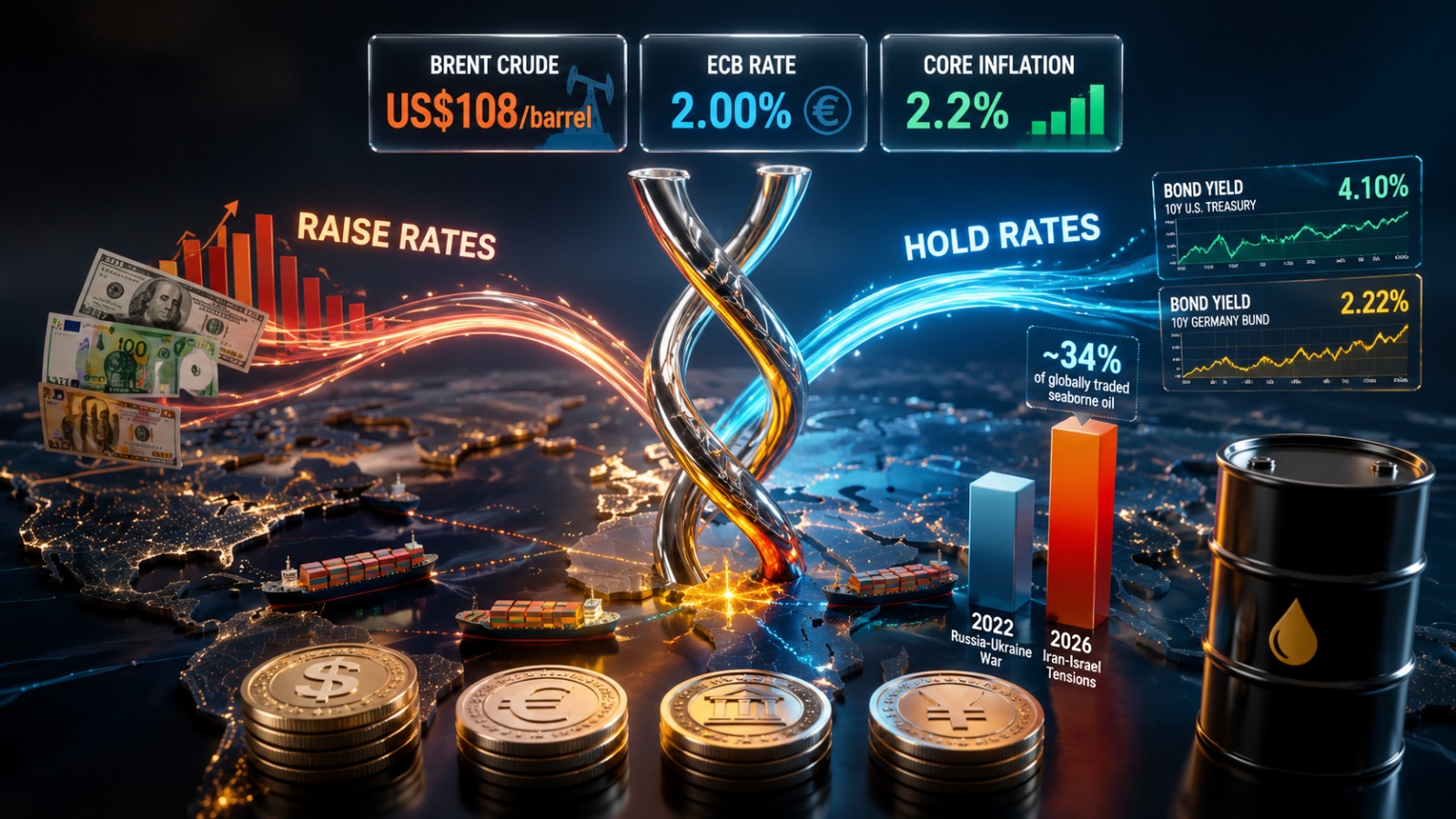
Financial markets entered 2026 anticipating a broader shift toward lower borrowing costs led by the U.S. Federal Reserve and the European Central Bank. However, recent spikes in oil prices and heightened geopolitical tensions across key shipping and energy corridors have forced policymakers to reassess inflation risks.
Analysts say the resurgence in energy-driven inflation concerns is reshaping market expectations for the second half of the year, particularly as central banks remain wary of easing policy prematurely.
Several policymakers across advanced economies have emphasized that inflation remains vulnerable to external supply shocks, especially in energy, transport and logistics sectors. The concern is that persistent commodity volatility could feed into broader consumer prices and slow progress toward long-term inflation targets.
The implications are particularly significant for emerging and frontier economies already managing elevated borrowing costs, debt-servicing pressures and currency instability.
African economies dependent on imported fuel and external financing could face renewed macroeconomic strain if global interest rates remain elevated for longer than expected.
Economists say the broader message from central banks is becoming increasingly clear: inflation may be moderating, but policymakers are not yet convinced the global economy has fully exited the post-pandemic inflation cycle.
Investors are now recalibrating expectations around the timing and scale of future rate cuts as energy markets become an increasingly dominant factor shaping global monetary policy decisions.