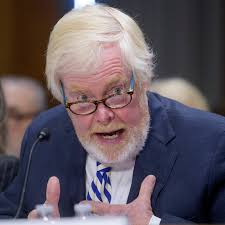
The ambassador, Leo Brent Bozell III, who assumed the role last month, drew criticism after he publicly disagreed with a legal ruling on the chant “Kill the Boer.” While some groups consider the chant to be hate speech, the Constitutional Court of South Africa has previously ruled that it does not break the law.
In response, the South African government issued a formal diplomatic protest, known as a demarche, saying it viewed the ambassador’s remarks as inappropriate.
The controversy began when Bozell spoke at a business meeting in the coastal town of Hermanus on Tuesday. During the event, he outlined several issues he believed the country should address. While discussing the chant, he said he did not care what the courts had decided, a comment many interpreted as disrespectful to the country’s legal system.
Following the backlash, the ambassador later clarified his position. He said he was ready to work constructively with South Africa and acknowledged that the US government respects the independence of the country’s judiciary.
South Africa’s foreign minister, Ronald Lamola, confirmed at a press briefing that the ambassador had been summoned to explain the remarks. He also stressed that relations between both countries involve mutual interests, noting that South African companies have significant investments in the United States.
Later, Zane Dangor, director-general of the Department of International Relations and Cooperation, said the ambassador had apologised and expressed regret that his comments created the wrong impression.
Relations between South Africa and the United States have become more strained since Donald Trump returned to the White House last year. The two governments have disagreed on issues including trade, diplomacy and South Africa’s international alliances.
Trump has criticised the government of Cyril Ramaphosa, accusing it of failing to protect the country’s white minority and raising concerns about its land reform policy.
The South African government has also challenged a US decision to prioritise refugee applications from white Afrikaners, arguing that claims of a “white genocide” in the country are not supported by credible evidence.
Tensions grew further last year when the United States imposed the highest tariffs on South Africa among African countries.