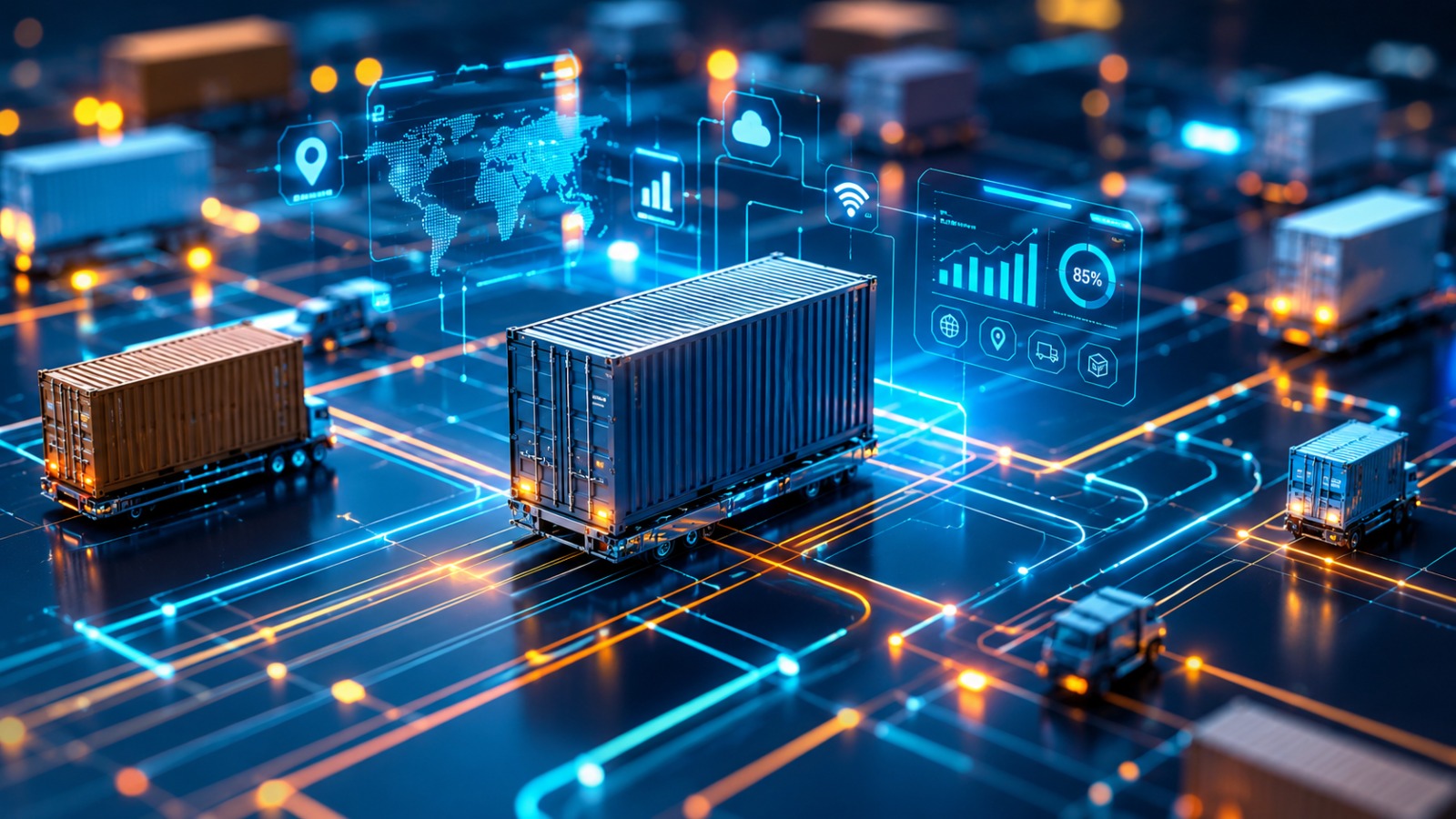
The push toward AI-driven logistics comes as multinational corporations continue adapting to years of disruption caused by pandemic aftershocks, shipping bottlenecks, geopolitical tensions and fragmented trade flows.
Major freight operators, shipping companies and industrial manufacturers are increasingly deploying AI systems across inventory management, predictive analytics, route optimization and warehouse automation to strengthen supply-chain reliability and reduce operational costs.
Executives across the logistics industry say AI is rapidly evolving from an experimental technology into a core strategic infrastructure layer for global commerce.
Industry analysts note that supply-chain resilience has become a primary corporate priority as businesses seek to reduce vulnerability to geopolitical shocks and volatile transportation networks.
AI-powered systems are now being used to forecast demand fluctuations, monitor cargo movement in real time, identify potential bottlenecks and optimize global distribution networks more efficiently than traditional logistics models.
The growing adoption of automation technologies is also reshaping competition across manufacturing and industrial sectors, where operational speed and flexibility are becoming increasingly critical to long-term competitiveness.
Analysts say firms capable of integrating AI into logistics operations may gain a significant advantage as global trade becomes more fragmented and supply chains more regionally diversified.
The transformation is also driving increased investment into cloud infrastructure, semiconductor capacity and industrial data systems supporting next-generation logistics operations.
For emerging economies and African markets, the shift presents both opportunity and risk.
Rising demand for supply-chain diversification could support new manufacturing and logistics investment across parts of Africa, particularly in markets seeking to position themselves as alternative production and distribution hubs.
However, experts warn that countries unable to improve infrastructure, digital connectivity and industrial efficiency could struggle to compete within increasingly technology-driven global supply networks.
Industry leaders say the future of global trade will depend less on low-cost production alone and increasingly on resilience, technological capability and real-time operational intelligence.